

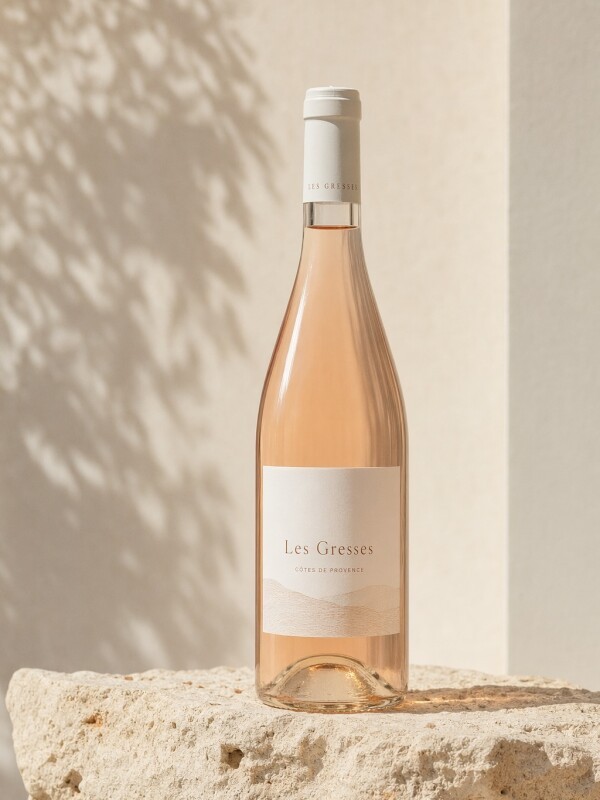
Rose · 2023
Les Gresses
Made for food, taut, not a poolside rosé
{
  "id": "3f8a2b60-439d-4a8d-b899-ad9f97a0aacf",
  "alt": "",
  "url": "/media/3f8a2b60-439d-4a8d-b899-ad9f97a0aacf/tarifs-des-vins-2026.pdf",
  "name": "Tarifs des vins 2026",
  "role": "",
  "legend": "",
  "credits": "",
  "preview": {
    "id": "dcce5680-52a7-11f1-af80-51ca7e06d567",
    "url": "/thumbs/dcce5680-52a7-11f1-af80-51ca7e06d567.jpg",
    "width": 430,
    "height": 320,
    "formats": []
  },
  "mimeType": "application/pdf",
  "extension": "pdf",
  "altDisabled": false,
  "description": "",
  "replacement": ""
}
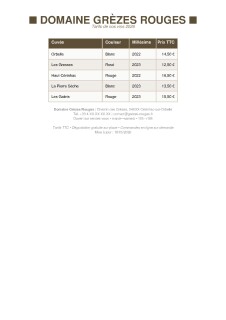
Document
Technical Sheet (PDF)
Tasting notes
Les Gresses — from the old Occitan word for stony ground — is a saignée rosé, not a direct-press one. The juice is drawn off after a few hours of contact with the skins, which gives it that pale salmon colour and a structure on the palate that direct-press rosés lack.
Grenache and Mourvèdre, picked together, ferment at low temperature in stainless steel vats. The wine is bottled early, in the depths of winter, to keep all its freshness and brightness.
Wild strawberry, pink grapefruit, a crisp saline finish. This is not a terrace rosé — it is a rosé for the table, made to go with grilled sea bass, a ratatouille or Collioure anchovies. Serve cool, not ice-cold.